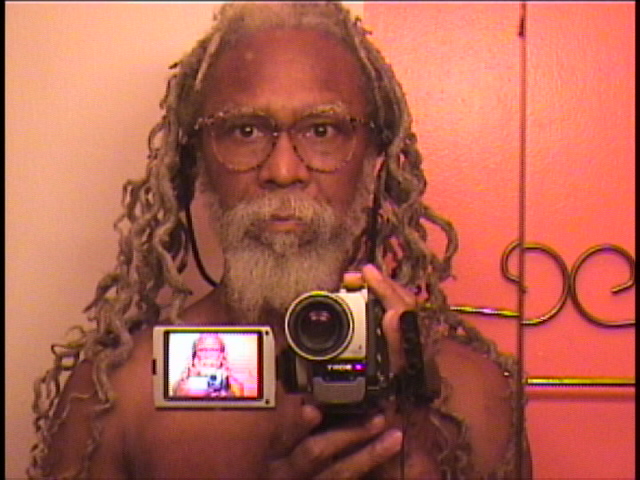
- travis -
Mississippi Artist
FACEBOOK: travis travis travis
TUMBLR: djPTSD
TWITTER: travisdjptsd
THE ONO TUMBLR
BRIEF ART STATEMENT
WRITING SAMPLES ^^^ Dedicated to Dr. Dwight Conquergood (1949-2004)
MAIL/CONTACT travis
Articles:
"ONO - To This Day" by James Porter.
http://www.roctober.com/roctober/ono.html"ONO @ Coach House Sounds" by Matt Baron.
http://www.coachhousesounds.com/ono
"A Noisy Protest: ONO Brings Its Provocative Musical Performance To The Woodlawn Collaborative"
by Alec Mitrovich.
The Chicago Weekly
"OVERLAY: A Conversation with travis"
by Rebecca Zorach / PROXIMITY Magazine==Zorach Article will be posted soon; very soon! /travis
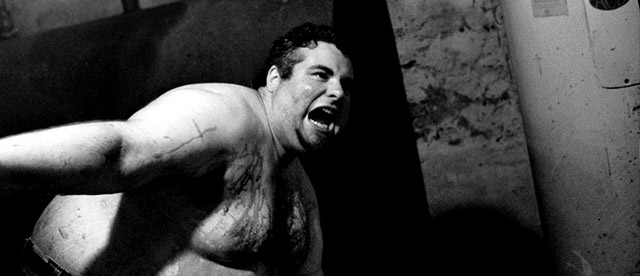
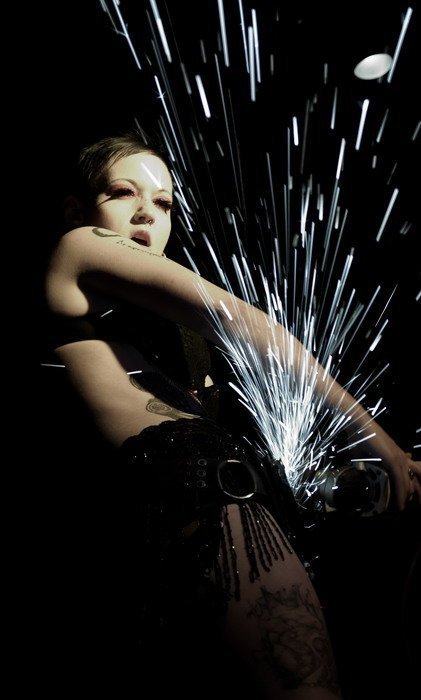
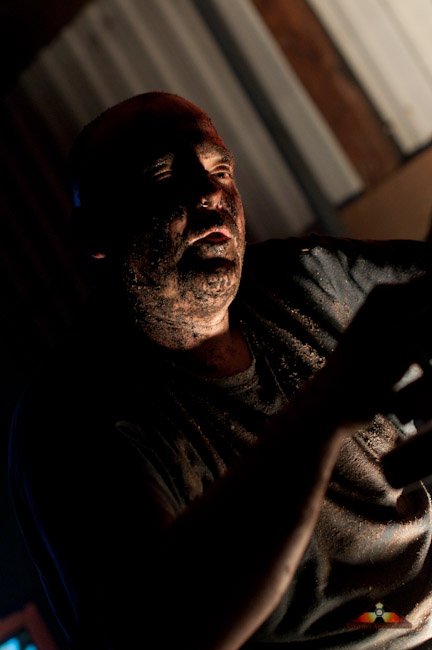
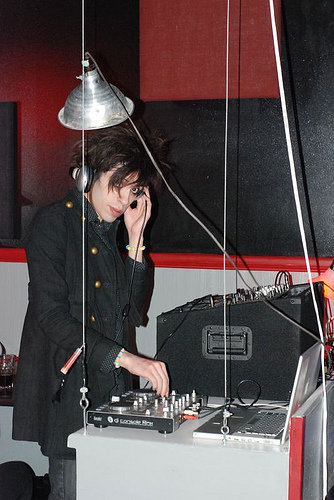
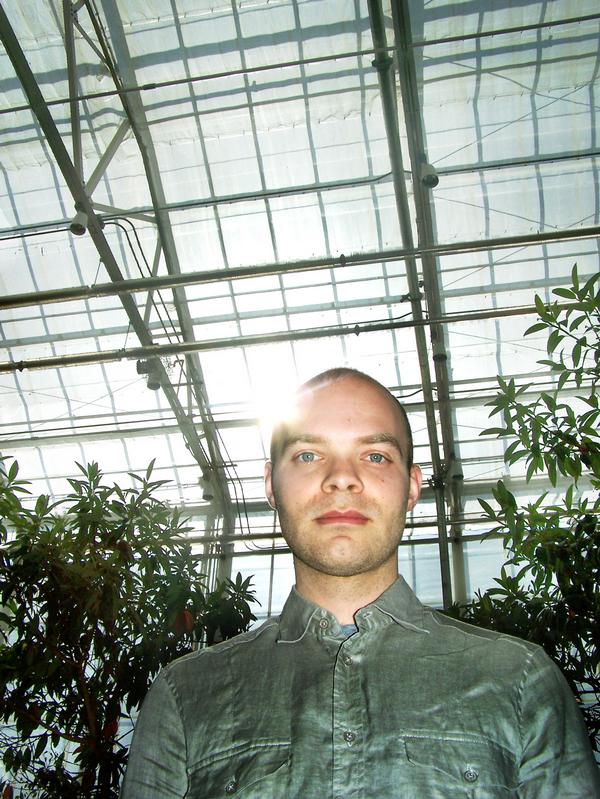
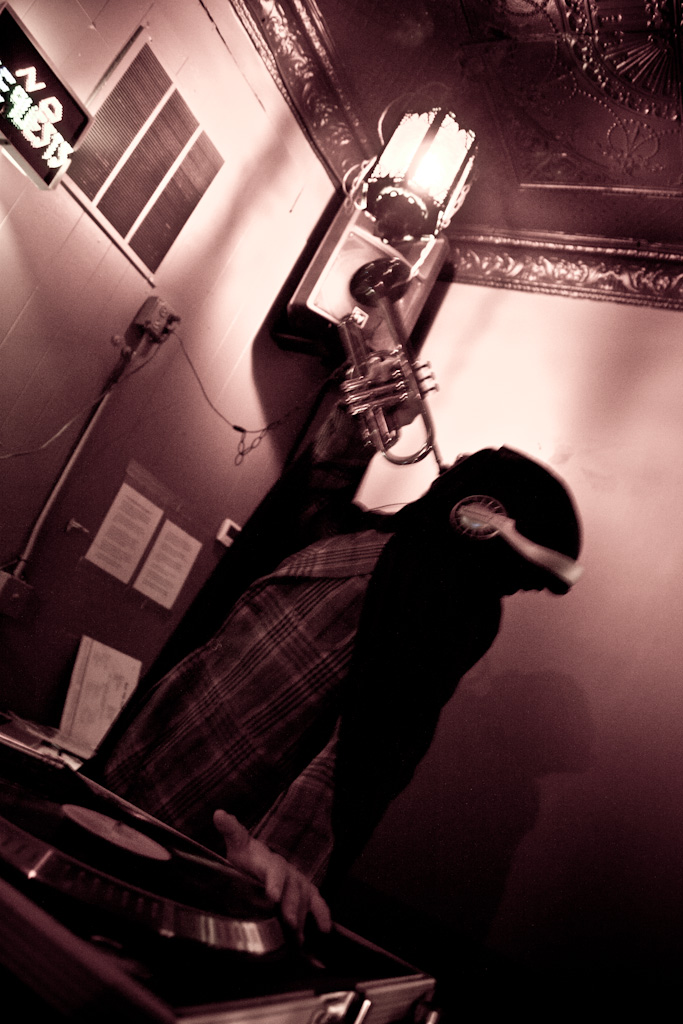
=== Gay Veterans honored by the City of Chicago ===
Posted by Mike Lackovich/CNN
Posted by mike lackovich
September 3, 2010 – Richard J Daley Plaza
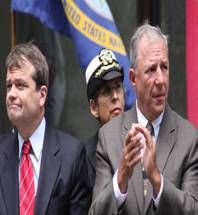
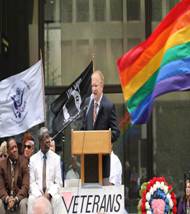
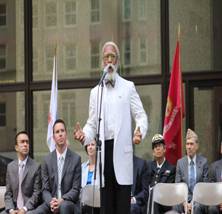
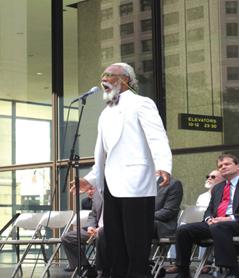
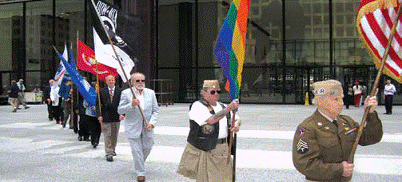
Mayor Richard M. Daley proclaims LGBT Veterans Day on September 3, 2010.
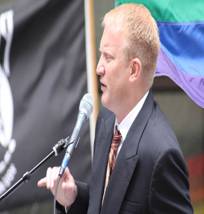
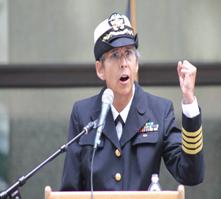
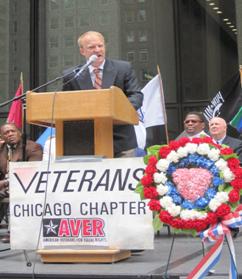
American Veterans for Equal Rights (AVER) presented With Liberty and Justice for All at noon. The hour long ceremony included speeches and remarks from various city and state officials. Congressman Mike Quigley was encouraging everyone to have faith that the repeal on “Don’t Ask, Don’t Tell” would be pushed through to the Senate after the Labor Day holiday.
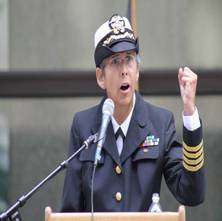
Also in attendance were veterans and service people who served in the military. Many proud to state how they honorably serve our country, yet disgusted with the way LGBT have to hide their personal lives. Ann Bidwell, perhaps most vocal on how she had to hide her relationship with her partner. To put the shoe on the other foot scenario: speculated what Senator McCain would do if his relationship with his wife Cindy, if it were outlawed. She supposed that he would not hide his relationship. Yet those in service are forced to do just that at the hand of Senator McCain and his homophobic counter parts. Somehow, according to them, being a homosexual affects judgment and ability to serve. If this reverse logic is followed through, then it could be speculated that Senator McCain’s heterosexuality clouds his ability to make a decision and should be considered a threat to national security. Stone-aged thinking like this is the reason for the repeal being brought up for discussion and action. It is just plain silly, stupid and outdated.
When you think about it further, people like Senator McCain and Congressman Kirk hurt our troops with discriminatory practices like Don’t Ask Don’t Tell, by increasing the frequency of troop deployment times. Rejecting people because they are homosexual means less troops and longer deployments for straight and closeted troops. Homosexuality has nothing to do with troop unit cohesion, ability to make a decision or ability to maintain a security clearance, any more so than Senator McCain or Congressman Kirk to do the same.
To further the argument that Senator McCain and Congressman Kirk are doing disservice to the troops, they are setting the troops up for failure when they leave the military. Since nearly all large companies have Equal Opportunities policies and embrace a diverse work environment, many troops transitioning into these work environments may find themselves passed over in a time of limited employment because of their homophobic ideology that is protected under the Don’t Ask Don’t Tell policy. The people who do slip into EEOC companies filled with hatred to the LGBT community, stand out like sore thumb. This would force them into a Homophobic Closet, where they are forced to hide who they really are. Not to mention that most states now have anti-discrimination laws that would make up for the balance of the companies that don’t have such anti-discrimination policies implemented on their own. So, again, how does Don’t Ask Don’t Tell help the troops?
Many people speaking were victims of Don’t Ask Don’t Tell. Forced to serve in silence or being outted and persecuted through military processes. People only wanting to serve their country with honor and integrity -- no differently from their heterosexual service members.
As a gay veteran, I was honored that the Mayor made such a proclamation that I could share a day of honor among my daughter and partner. Celebrating the dedication that I have given to my country through two wars in the Army and the Navy. I am very proud of the 13 years of service that I gave my country, and yet horribly ashamed of the homophobic banner they shield themselves in.
We all swore to defend this country. When I swore to defend this country, I didn’t exclude anyone…..even those that can’t see past their hatred, misguided logic and ignorance to do the right thing.
Support ALL our troops!

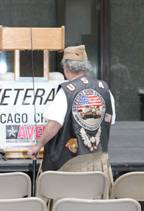
=== A Salute to Chicago's LGBT Veterans ===
According to the Urban Institute, more than 1 million lesbian, gay, bisexual, and transgender veterans are currently living in the United States. Veterans from the lesbian, gay, bisexual and transgender (LGBT) communities were honored at "With Liberty and Justice For All" -- the nation's only municipally sponsored, military salute to LGBT veterans. It's the City's 8th annual Salute to America's Lesbian, Gay, Bisexual and Transgender Veterans

This unparalleled event is meant to pay tribute to America's LGBT veterans and inspire dialogue and advocacy in their behalf.
LGBT veterans spoke out on their experiences in the armed services and under the U.S.military's "Don't Ask, Don't Tell" policy, the policy that bars gays from serving openly in the military. The gay veterans were honored by the U.S. Representative Mike Quigley, whom was the featured speaker and has issued a statement calling for the repeal of the U.S. military's "Don't Ask, Don't Tell" policy - he voted to repeal the "Don't Ask, Don't' Tell" policy in June. Recently, the president said in his State of the Union address this year that he intended to move and to overturn the policy, and his administration has been taking steps to do so. Back in August, at a Pentagon briefing, Marine Corps Commandant General James Conway signal the removal of one of the final hurdles to the implementation of openly gay service and the repeal of "don't ask, don't tell." Commandant Conway stated that "if the law changes, we pride our Corps in leading the services in many, many things, and we're going to have to lead in this too."
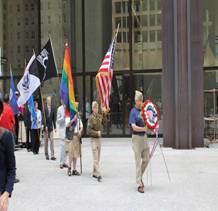
Renowned jazz vocalist Lucy Smith of the Lucy Smith Jazz Quartet performed the national anthem, and the program included a presentation of colors, a Mayoral proclamation, and a wreath-laying ceremony.
You rock, Chicago!!
*Photos courtesy of Mike Lackovich
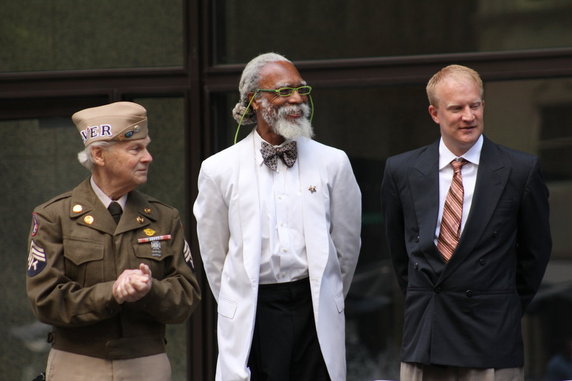
In this gallery


LGBT veterans honored by City of Chicago
2010-09-08

LGBT veterans were honored by the City of Chicago and American Veterans for Equal Rights
at Daley Plaza Sept 3. The ceremony, “With Liberty and Justice for All,” marked the city’s
eighth annual tribute to LGBT veterans.
More than 50 people attended the hour-long ceremony, which included speeches from
veterans, a wreath-laying ceremony, a mayoral proclamation and an address by U.S. Rep.
Mike Quigley. Lucy Smith of the Lucy Smith Jazz Quartet performed the national anthem and
former service members were honored on a stage in front of the Daley Center.
Quigley, who has voted to repeal “Don’t Ask, Don’t Tell” (DADT), thanked veterans for their
service and offered his regrets that LGBT veterans have faced discrimination. “We’re asking
you to be all you can be except for who you really are,” he told former service members. He
also asked veterans to remain patient. “Have faith folks. This country eventually gets to the
right spot.”
Veterans who had been dismissed under DADT expressed their frustration and impatience.
Lee Reinhart, one such individual, pleaded with attendees to pressure government officials
to repeal the policy. “I’m tired of broken promises,” he said. “I’m tired of delays. I want to
be able to put my uniform on and make my mother proud.”
Text by Kate Sosin; photos by Sosin and Mike Lackovich,
with more at http://www.WindyCityMediaGroup.com

Excerpt from Joe Carducci's page: The New Vulgate
http://newvulgate.blogspot.com/
ONO business
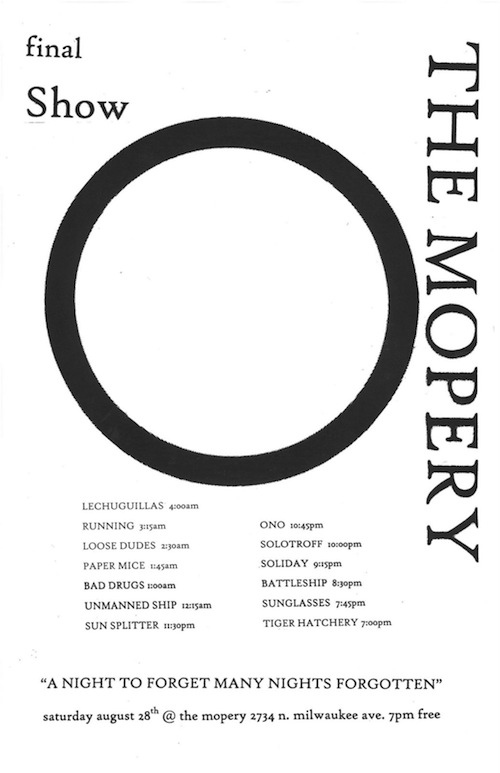
On Saturday’s performance etc. at The Mopery’s final night:
From: Travis
To: Krakow
cc: Carducci
Subject: ONO Plays The Last Show @ The Mopery
Date: Sun, 29 Aug 2010 06:32:07 -0500
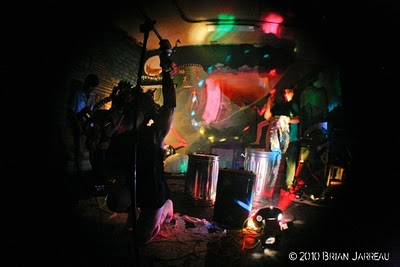
PlasticMan: MoMoMopery. I am just out of an hour-long bath. Trying to wash the nicotine, the 100+ degree jet engine exhaust, the smell of cannabis sativa and the woolly feel of giddy mole spores from my oozing pores into tomorrow's deep tunnel drinking water. At least .016 inch of creeping brews saturated MoMoMopery's ever-deeping multitude.
"Where you guys come from?"
Nearly mud-like, look and smell like Bar-B-Q/Friday night fish fry, punctuated by crud amplified by hazy high voltage from crunchy metal cans, plastic slivers and sound of breaking/broken bottles stacked 3' high near the entrance; spike heels stuck in sticky pink-and-black substance consistency of mud pack or my Mississippi-style banana creme pie will not wipe off my electronic spaghetti, my hiked-up frocks or my American Standard enamel bathtub.
"I just bought your album for $80 on ebay."
"I paid $200 for mine...."
Dizzying. Lights out. Train wreck. BBQ pit, served up with smoke, soot and shameless, temperamental sonics. Trials by fire. MoMoMopery baptismal; do or die. And we are better precisely because we did not die. Yet. Yet. And yet, building our immunity, one after the other: Spectacular warriors rattled the humidity-raining rafters. We fed on jet fuel. We fit right into this house that MoMoMopery made. Now, it is a half-hour before show time. Hundreds! of hungry hearts, parts and eyes, can not wait for ONO fits and starts and never ends.
"I have never seen anything like it before!"
We did surely wish you were here!
"That was the first Velvet Underground cover I have ever heard that I liked."
"Cops are downstairs, can I interview you right here?"
Your vehicle did, indeed, trot us here for this Medieval monasticism, more like post-modernist medicine in MoMoMopery consistency, not unlike cod liver oil.
"I can't get that phrase 'I know I been changed' out of my head...."
I would want you to suffer my out-of-body, body-as-unventilated humidor discomfiture; ONO feverish presentation and our faces flooded by flashes from MoMoMopery's community of friends with so many digital screens. We missed you, yes, yet we stand in sincerest hope for your happy recovery.
With Love. /travis
= = =
FM: P.Michael:
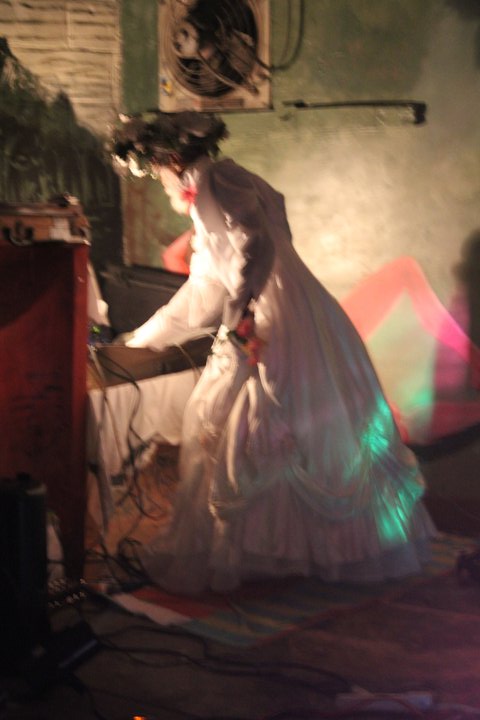
The show was ridiculous ...the joint was packed... I have never seen Mopery that packed.. the band came on one right after another... there were 3 stages.... all the bands I saw were at their best and gave incredible sets ...all brought something different ..... the air was thick beer everywhere they surrounded us like hungry animals... the sparks flew of metal during Heroin ....it was majestic , shamanistic . and more ....this night will live in Chicago under ground history ..
FM: BloodLust
Sunday, August 29, 2010:
Mopery R.I.P. Insane night! It was all good until the paint monsters attacked. I headed out at 3:45 AM to grab a cab when the glass really started crashing. The night encapsulated all that was great about the space. On fucking steroids. And maybe why it is a good thing that it closed. There were more people out on the sidewalk when the battalion of cops came than there were inside during the typical show there. It was a miracle that they did not shut things down. If I thought that the Sightings/BLOODYMINDED show in April had a big crowd (I heard approx. 300) then this had to have maxed out at well over 400????? There was nearly no room to move around at the peak of the night... and certainly no air to breathe. Intense!
Really enjoyable sets, overall. Ono in full glam-rock mode was awesome. Sun Splitter totally pummeled, despite the electrical crashes. Loose Dudes set the energy in full hyper mode (I did not know that Maggie from Rager was in the band - BLOODYMINDED played a fun show with them a few years back at Subterranean), followed by an excellent and frantic Running set... and then Lechuguillas took it home in the most spectacular way. I cannot wait to play with them again on 9/11! They have to be among the most exciting bands in the city, right now.
I did a solo microphone set that ran for about nine minutes, and I performed a version of "Leak," the Cadaver in Drag song that I wrote and did vocals on, from their "Absuse/Breathing Sewage" CD. It went smoothly enough, and from the sound of the recording, the crowd actually quieted down once my feedback started rising. I was amused that a big cheer rang out as I hoisted the mic-snake over my head, and that duct-taped monstrosity was at its heaviest and fullest size, ever. Great! It sounded a bit sparse to me, feedback-wise, but some folks said that it was pretty piercing. Thanks to Jason Soliday, for the use of his PA and for watching the peaking levels. Thanks to all of my friends who came out early - or especially - to see me --- and for braving the hot, humid, and smokey conditions inside. And of course, major thanks to everyone at The Mopery for the fun shows that I played there, for the many shows that I saw there, and for the major contribution to the Chicago underground music scene!
= = =
Friday, Sept. 3, noon
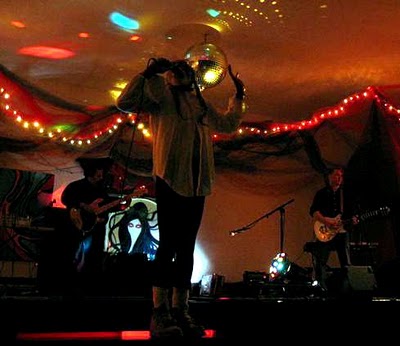
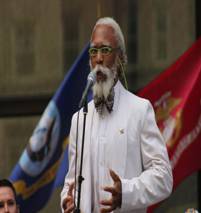
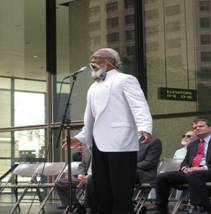
travis sings "America the Beautiful"
Chicago's annual Salute to LGBT Veterans
Daley Plaza
= = =
Friday, Sept. 3, 8pm
ONO
Transistor
5O45 N Clark, Chicago
= = =
ONO
Wed. Sept. 15, 9pm
WLUW's Delirious Insomniac Freeform Radio Show 3rd Anniversary Event
Darkroom Bar
2210 W. Chicago Ave. Chicago, IL
[Photographs by Brian Jarreau and Gretchen Hasse.]

ONO PERFORMANCE SCRIPT FOR ELASTIC ARTS FOUNDATION
2830 North Milwaukee Avenue Chicago, IL 60618-7401
21AUG10
(I)= = = = = = = = = = = = =>>>[SPOKEN] “ALICE! His older brother Eyes small Half shut Dull Ears small Head …. point Teeth … sharp Bed Wall – black… silk … sheet Closet Knives Box Images Moving Ball … in air The images On a couch One laughing My nerves I’m shaking My head… The pain… The excitement I’m waiting Then pain… My head…. I can’t open my eyes ALICE!”
(II)= = = = = = = = = = = = =>>>[SILENCE/Foreshadowing] “IN 2003, I WAS IN A TERRIBLE CAR CRASH. I FELL ASLEEP AT THE WHEEL AND AWOKE TO THE SOUND OF CHURNING METAL." >>> [SILENCE/Foreshadowing] // >>>EXIT travis.
(III)= = = = = = = = = = = = =>>>ENTER ONO, minus travis//ONO Performs BREAK-UP. >>>travis reenter when all inst./voice are playing, and recite/overlay: "WE ARE THE OWLS AT NIGHT. WE ARE NOT WHAT WE SEEM. WE ARE NOT PASSERS-BY. WE ARE NEFARIOUS." (REPEATED) >>>THEN, "END SUITE ... JOYOUS NOISE...." (CHURNING METAL!)
(IV)= = = = = = = = = = = = =>>>I SPARKED AN OWL “I Sparked an Owl By Shannon Rose Riley Quiet spoken by Shannon 1. And I was told In not some far off distant light To wait To hear What I am told …. “Next?” They said. …. “Next” Sample starts ---- then a beat Then lap steel I sparked an owl last night I couldn’t believe How big I made it I sparked an owl last night I couldn’t believe How big I made it The percussive piano begins 1st Count 10 then percussive guitar First a statue Dark and large And then, alive Wings ranging wide Hook and claw White nose and eye. And I was in the book dept. At L.L bean Looking for books When I turned around and let out a little ‘oh’ When I turned and Saw the owl: On a book called Ghost of the woods Or Ghost of the Forest A book on the gray Owl… And… Which… It Reminded me: I sparked an owl last night Last night. I sparked an owl last night I rendered it in gold I sparked an owl last night I sparked an owl last night I sparked an owl last night 2. I sparked an owl last night A Thin oval face It was so still So so still It was like a statue It was about 3 feet high Still as a statue at first glance --then I said a word Or maybe my friend Says a word And I turn around Quiet then spoken by Shannon Maybe not so silent, fit. And I had Forgotten what a Beautiful thing I had made I forgot what a beautiful thing I had made I had forgotten what a beautiful thing I had made until That ……….. I sparked an owl last night I sparked an owl last night I sparked an owl last night
(V)= = = = = = = = = = = = =>>>ALICE IN WONDERLAND 1. “Going down….” Sample 1----Bass >>Piano playing chords >>Then guitar “Going down down down…. Tears I shed make a river going down down down….” “It’s the doormaus in his house” (REPEATED) “PRISM! PRISM! PRISM!” 2. THE DUCHESS SAMPLE 2 Very noisy staggered percussive sounds “More pepper.” “Off with her head..ha ha ha ha ha….!” 3. “How to make a Hatter Mad?” Sample 3-funky beat >>>Concertina >>>Bass >>>Guitar “Poisoned by Mercury.” “Cursed by the queen.” “And it’s always 6:30 if you know what I mean….”
(VI)= = = = = = = = = = = = =>>>INTRODUCTION TO ENNUI Bring the sound down to the lonely concertina to wheeze its way into ENNUI [CONCERTINA & VOICE ONLY for INTRODUCTION] “ALICE! Sugar pill. I love the stillness of the wood Scarce heard Here from the world The silent tears I weep Lull the vexed spirit into rest Oh, sweetness then to couch alone To live in joys that once have been If all the day ends in death Ye golden hours of Life’s young spring Of innocence, of love and truth (pause) I’d give all wealth that years have piled The slow result of Life’s decay”
(VII)= = = = = = = = = = = = =>>>ENNUI © 1980 by travis Je me reveille tot =Le garcon =Le jeune filles =Je les vois Je m’amuse = je m’amuse =je m’amuse Que voulez vous faire ce matin Que voulez vous faire Je voudrais partir Non! Je me lave aujourd’hui? Non! Non! Non! Ennui! Ennui! Ennui! Que voulez vous faire? LUNDI Que voulez vous faire ce matin MARDI MECREDI JEUDI VENDREDI Que voulez vous faire SAMEDI! DIMANCHE! Que voulez vous faire Ennui! Ennui! Ennui! Que voulez vous faire
21JUN10
ONO Interviewed by LIAM WARFIELD
Secret Beach #2
21st Century ONO
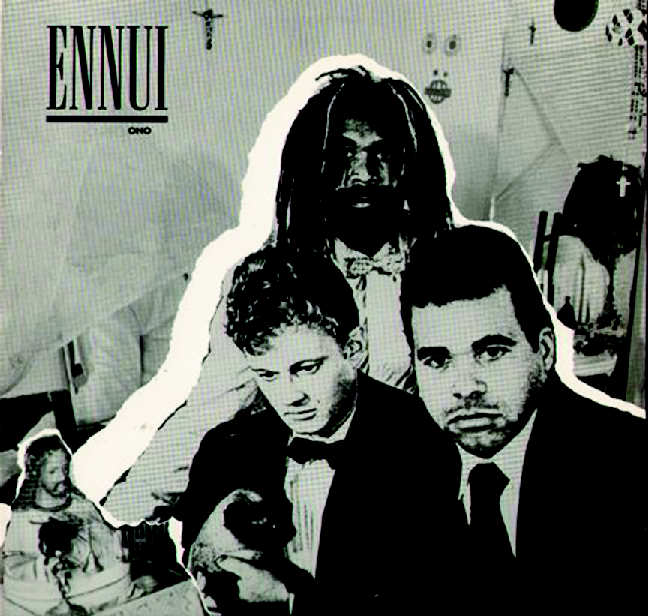
(ONO 1985: Ric Graham, travis, P.Michaael Grego)
I hesitate to brand
ONO
anything so
specific as
Queer—they
defy any such neat classification.
More to the
point might be lowercase
queer, and I’ll borrow
definitions from
Merriam-Webster: differing
in some odd way
from what is usual or
normal; eccentric; obsessed; touched.
Differing from what is usual
or normal—indeed!
ONO
inhabits other realms entirely, not so
much a band playing
music
as a vessel of divine
witchcraft and sensual
incantation.
ONO!
They came across my
sky like a thunderclap. It was last November, at a cavernous,
smoke-filled warehouse in Chicago called the Mopery,
where
I’d come to play a show with my band. We walk into the place
with our little rock and roll equipment
and there’s this striking
man—this older black man, dressed head-to-toe in flowing,
messianic white;
hair long, white and braided, wearing a bow-tie
and spectacles, looking at first glance like some voodoo priest,
or a messenger from the far reaches of space—and he’s hanging
pieces of sheet-metal from the ceiling.
Turns out he’s in the
opening act, and as I’m loading in equipment I’m anticipating
something at least unique,
totally unprepared for the force of
nature which is about to come screaming through the Mopery.
I was entranced—I hardly remember a thing. ONO!
There was a ferocious roar, and the sound of metal on metal;
there were great, earthy clods of primordial bass,
and scraps of
sonic debris whizzing through the air, and a booming, prophetic
voice towered above the fray,
shouting down the walls of Jericho.
I guess they were a band, but I didn’t know what the hell was
happening—something
was being invented
before
my eyes, conjured, a world
made new.
I do remember
their final song was an
epochal version of Lou
Reed’s Heroin
that made the original seem like a
game of patty-cake.
The
singer—the messenger
from space—convulsed on the floor, writhing around
in a gut-twistingly real fit
of Agony and Ecstasy that
was thrilling and terrible to
behold.
I mean, Lou Reed
just sang the song;
these
guys detonated it.
I had to
be peeled off the floor after
they were finished.
Not only that—
my band had to follow
theirs! With our dinky
little rock and roll songs!
I was mortified. I meekly
approached the members of
ONO later in the evening to
pay them my compliments,
and they responded not only with graciousness, humility and
compliments of their own—they liked my band!—but with an
invitation to lunch on top of it all!
The band practiced every
weekend, they said, on the far South Side, preceded each week
by a communal meal,
and I was welcome to join them some
week.
How often have you told someone you liked their band
and they invite you to lunch, right off the bat?
Who were these
guys?
They’d been doing this, they said, since 1980—literally
as long as I’ve been alive.
I wasn’t quite able to wrap my head
around it—that a juggernaut like ONO had been lurking in my
own backyard for three decades and I’d never encountered them,
or even heard of them.
I hobbled home, my head irrevocably
skewed.
It took me six months to accept their invitation, over the
course of which I had the pleasure of seeing ONO
play on several
occasions at a variety of venues, from dive bar to nail salon. I
had a look at their website;
their website, actually, swallowed
me whole and spit me back out several hours later, panting.
It
contained not only the bio and discography that one might expect
from a
band’s website but a long and painstaking history of the
group from 1980-present—where they’d performed
and on what
date, who with and at what time, what the band wore and what
songs they played,
how the audience reacted—not to mention
free-floating passages of philosophy, manifesto and avantgarde
poetry. The sheer quantity of unusual facts and startling
juxtapositions called for slow digestion;
I mean these guys were
serious legends, unsung punk deities from a weirder planet.
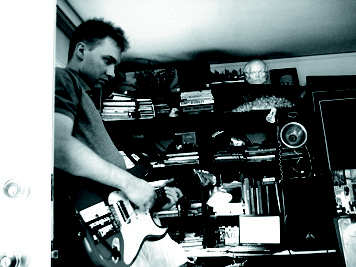
(Jesse Thomas)
They’d been around the block and back again;
they’d played
shows in the still-smoking ruins of burned-down houses,
they’d
played at the University
of Chicago and smeared
mashed potatoes over
“everything, everywhere!
Even in the grand piano”;
they’d played with Naked
Raygun and nearly started
a riot at the Cabaret Metro.
I mean, they turned the
city upside-down!
I also
struck up a little email
correspondence with travis,
the singer of the band, who
proved to be a colorful and
courteous letter-writer.
We
became friends!
It was at travis’
insistence that I finally
made it down to 98th and
Cottage Grove;
seeing that
I wasn’t getting my ass in
gear to do it before leaving for Germany,
he finally pinned me
down for a Saturday afternoon visit, going so far as to send me
an advance menu for the day’s meal:
zucchini tomato frittata
and cheesy cornbread, served with a Coastal Shiraz.
For a
white kid from Evanston, 98th and Cottage Grove is practically
the edge of the world—an awfully long bike ride, at least. But
when I arrived lunch was just being served, every bit as savory
as advertised, and I sat down to eat with the band—travis, cofounder
P. Michael Grego, and relative newcomers Jesse Thomas
and Rebecca Pavlatos—feeling very much welcome and in good
hands. After lunch and a tour of the grounds (travis’ house is
spilling over with artwork and artifacts, and his backyard garden
is expansive, containing a number of exotic and poisonous
plants) ONO began practicing. Though lacking the visual and
performative elements so integral to their live show, they were
dense and in great form and I was thoroughly transported. Jesse
and Rebecca then had to split, but I got travis and P. Michael to
sit down for an interview, and over wine and leftover cornbread
I was treated to some chapters and reminiscences from the saga
of ONO.
21st Century ONO
Beginning at the beginning, then: travis, the eldest
member (though his tireless energy exceeds that of a schoolboy)
was born in 1946 in Itawamba, Mississippi, a county remote enough
that electricity had not yet arrived. His mother was something of
a wild woman. “Badass Rejetta,” travis laughs: “She bad. She
was wild even then. I was born out of wedlock, and my mother
had no intention of marrying my father. I was born in the same
house as her and my grandmother. And then she immediately,
two days later, goes to St. Louis and joins a female basketball
team. The first time I met her, after I was born—she comes
to Itawamba and she’s with her boyfriend—they come on a
motorcycle. Nobody had ever seen or heard of a motorcycle there
before.” His mother did eventually marry, but travis’ stepdaddy
was something of a rolling stone, and in 1959 Rejetta took travis
and his sisters and moved to Akron, Ohio. “In Akron life was
very different,” he remembers. Even as a teenager, travis had a
queer flair that must have raised some eyebrows in 1950s Ohio.
“I wasn’t aware that I was any different from anyone else—and
I don’t think I am now,” he says, “But thinking back on it, I
had these great phases—I
would wear only green for
a whole year. I had a green
suit, green shirt, green
shoes… if it wasn’t green,
I would paint it green! I’ve
always liked uniforms…”
He would soon put on an
entirely different type of
uniform, joining the navy
in 1963.
“I joined the
military because I wanted
to see the world,” travis
explains.“I was from
Mississippi!”
He remained
in the navy for six years,
serving on the USS America and earning a small pile of
medals.
The America he
returned to in 1969 was a
country in flux—the rules
had changed, its soul had been
pyschedelicized—and travis
felt restless. “What do you do after you’ve spent six years in
the military?
After Vietnam and all that, the rest of the world
becomes absolutely useless and unnecessary.
The things that
people worry about become so insignificant.”
He returned
to Ohio to attend Akron University. “I’m working on my first
undergraduate, and everything is just so dull.
I’m so bored. And
I go to Cleveland, which is nearby, and—kids are having a good
time and all that, but their values
are all somehow... irrelevant
to my world. So while in Cleveland I join the Ram Dass ashram
and start studying to become
a Kundalini Sikh. And of course
everybody is freaking out because of the way I dress—I was
much more outrageous then.
Much, much, much.
Everybody
thought I was a tranny or a queer or something.
I could have
been—but I hadn’t thought about it.
I was just doing whatever
it is I did.
So I’m in this ashram. In the ashram you wear the
same thing all the time; you’ve got the turban, you’ve got the
white cotton everything… except, I discovered this store that
sold women’s shoes in my size!
I wasn’t trying to be a tranny or
anything; I just liked the feel of them! So I wore my holy robes
with these… red leather, high-heeled, open-toed pumps!
So I got
to the point where they’re wondering, what to do with Travis.”
“By that time I’d seen all these rock and roll people,” he
continues. “Because in Cleveland—everybody came there.
And
I was doing poetry performances”—with proto-punk greats like
Pere Ubu—“and all this, and it was a lot of fun,
but I’m thinking…
what else is there? So off I go. And I decided that I really did like
Kundalini Yoga,
so I decided to go to the ashram in New Mexico
and completely surrender my job, my life, my everything. And
I’m driving across the country, and I come to Chicago, and I’m
driving down Lake Shore Drive and it was so beautiful;
and I just
decided—I think I’ll stay here for the summer.”
After trying and failing to find secretarial work at
mainstream black magazines like Ebony and Jet—he could type
a flawless 99 wpm but says that the more old-guard editorial staff
didn’t approve of his personal style or comportment
(“They treated
me like shit,” he hisses)
—travis was hired at the Northwestern
University Law School, where he could dress as outrageously
as he pleased. “Some theater students came down and made a
film called A Day in the Life of Travis—they filmed me,
actually
for a whole week. In the bathtub, at the law school, the whole
nine yards. They were shocked that I went to the law school in a
wedding gown. I mean, 25 feet!”
travis ended up sticking around, and it was here, in
the late 70s, that he met Cathy Brooks. The daughter of one of
travis’ co-workers, and an early member of ONO, Cathy was a
Shakesperean actress who moonlighted selling pig-ears from a
truck in Bronzeville. She had a wild streak to match,
and she
began showing up at travis’ house in the middle of the night with
a machete,
dragging him out of bed to go dancing at La Mere
Vipere, a north side gay club which was home to
the city’s nascent
punk scene.
Cathy soon introduced travis to her friend P. Michael
Grego.
P. Michael recalls one of their early encounters—they’d
gone to meet travis at the Park West for a performance by
John
Waters’ legendary go-to actress, Divine:
“From across the park, in
the distance, we saw this man… he was naked up to here, and he
had on panties and some military boots and this long, flowing lace
or something that was flying in the wind.”
The three were soon
running around town together, checking out bands and reading
each other’s poetry.
“Starting a band was P. Michael’s idea,”
travis says.
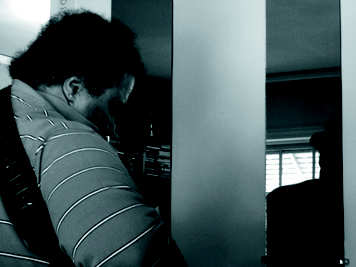
(P.Michael Grego)
P. Michael
was a
native south-sider who’d
grown up in an old Hyde Park
mansion with an extended
mixed-race family. He and
his siblings were kept mostly
at home, amid eccentric
relatives and their unusual
habits; his grandmother
and aunt, he says, practiced
a bizarre, quasi-Catholic
religion and read fortunes,
and his grandfather was a
Panamanian who played the
Spanish guitar and loved
American country music.
There was music throughout
his early life. His mother
played classical piano and
his father played Latin jazz
on the saxophone.
In his
early teens the family moved further south, and P. Michael was
suddenly steeped in the world
of south-side soul—he’d see Jackie
Wilson and Curtis Mayfield around the neighborhood,
and Calvin
Carter, of the legendary Vee Jay Records, was a neighbor. He began
putting together
a succession of R&B and rock bands, playing
any gigs he could get—strip clubs, heavy metal bars—
his musical
consciousness expanding ever-further as he was exposed to more
fringe elements like Iggy Pop and Funkadelic. By the time he
hooked up with Cathy and travis, P. Michael
was ready to tackle
something new; the infant punk scene hinted at wild new vistas
of creative possibility, and he wanted action.
“I had a vision. I
said it was going to be a fusion of poetry and art, and visuals and
sound,” he says.
“Punk theater—threatening punk theater.” For
their part, travis says, he and Cathy just sort of hopped aboard
for the ride. “It was up to P. Michael to tell us what to do. We
had no idea what this was about.”
travis did, however, coin the
band’s name, an abbreviation of ONOMATOPOEIA.
“I wanted
to be able to write things that didn’t necessarily mean anything to
anybody in the whole world, but the very sound of those phrases,
and the voicing of those phrases, impacted you.”
The nascent band picked up a guitar player almost by
accident.
“I was roller-skating from my house to my office every
day,” travis says, “And one day I ran into this kid—this wild,
insane
German who’s running into everything, and I’m getting a drink,
and he’s comes—boom!—running up and says,
I have nobody
to skate with me! Will you skate with me? So we go skating—it
turns out he has this art exhibition on display,
so we go to his
art exhibition… and so Mark then becomes our guitarist. He’d
never played guitar before in his life.”
Their first show was with
Al Jorgensen’s pre-Ministry group, Special Affect,
and a young
Naked Raygun,
in October of 1980.
ONO would, by default, find
a home of sorts in the city’s punk scene,
playing frequently with
bands like End Result and the Effigies, but from the beginning the
group’s outlandishness
relegated them to the margins.
ONO takes
the stage;
creates a pyramid of 100 watt amps—plus, at the edge
of the stage,
three altars of chains, hubcaps and metal pipes, to
open our set with “Danger,” reads travis’ account of a “typical”
ONO performance. Was it my white wedding dress with train
and veil or our amplified metal/”noise” that frightened away
the hecklers? Nor did their music bear much resemblance, aside
from sheer volume, to the 1-2-3-4 whiplash of
hardcore punk
groups like Naked Raygun.
ONO described themselves
as an
Experimental
Performance, NOISE, and
Industrial Performance
Poetry Band,
Exploring
Gospel’s Darkest Conflicts,
Tragedies and Premises
—a
formula expansive enough
to encompass liturgical
chanting, freeform noise,
negro spirituals, found
poetry,
patriotic hymns,
junkyard percussion and
repurposed rock and roll,
but not one designed to
win many fans
among
white, suburban punkers.
“We never really fit in
with the punk thing,”
P.
Michael readily admits.
For ONO, in fact, the music was often
an afterthought—queer spectacle was the thing.
“I have never
liked music,” travis insists, with a provocative grin.
“I don’t care
about music. I have no interest whatsoever in music. None.”
Not to say that ONO went unnoticed.
They were the
subject of a 1983 Chicago Reader feature titled Chicago’s
Best Kept Secret, and released an LP on Thermidor Records
called Machines That Kill People.
They meanwhile picked
up a new guitarist, Ric Graham, and continued to put on a
tireless succession of increasingly extravagant performances
at increasingly unusual venues—a
“psychedelic dance party”
in upper-crust Wilmette; in an elevator at 850 N. Lake Shore
Drive, at Navy Pier’s
Chicago International Art Expo, where
travis, naked but for a jockstrap, was dragged through the
audience in a steel cage—though they never toured any further
than Kalamazoo, Michigan.
Ever-interdisciplinary, ONO also
collaborated constantly with filmmakers, painters and poets
from the city’s artistic fringes.
By the late 80s things began to slow down for ONO as
a proper unit.
Neither travis nor P. Michael talk about the band
having ever broken up;
it seems they more went into hibernation, as
other paths and projects came to the fore.
travis returned to school,
pursuing performance studies with Dr. Dwight Conquergood
while continuing to work full-time at the law school. He got
involved with, and eventually became vice-president/treasurer
of American Veterans for
Equal Rights, an advocacy
group for LGBT vets.
And
in 2001, after a visit to the
Royal Museum for Central
Africa, an ethnographic art
museum in Brussels,
travis
began painting. He paints
daily, and his house is literally
filled with paintings, floor
to ceiling,
lushly primitive
bursts of expressionist color
and form; his art has been
featured in numerous solo
and group exhibitions. He
struggles, however, with the
black art establishment, who
find his work “too dark”;
his
website, travistravis.com,
proclaims he’s been rejected and despised by black galleries.
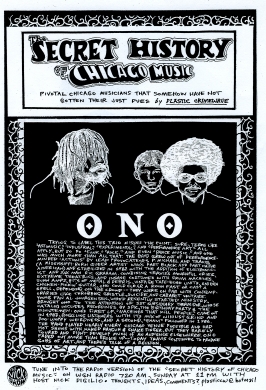
The band and its legacy had fallen into something of a
state of neglect by 2007, when Plastic Crimewave featured them
in his Secret History of Chicago Music comic, which appears
weekly in the Chicago Reader. travis and P. Michael were,
he
says, “hard as hell” to track down, but once he did his interest
convinced them to start playing again, initially as a
one-off for
his Million Tongues Festival. They’d been palling around and
sporadically collaborating with
keyboardist Rebecca Pavlatos
and guitarist Jesse Thomas (of the End of the World band),
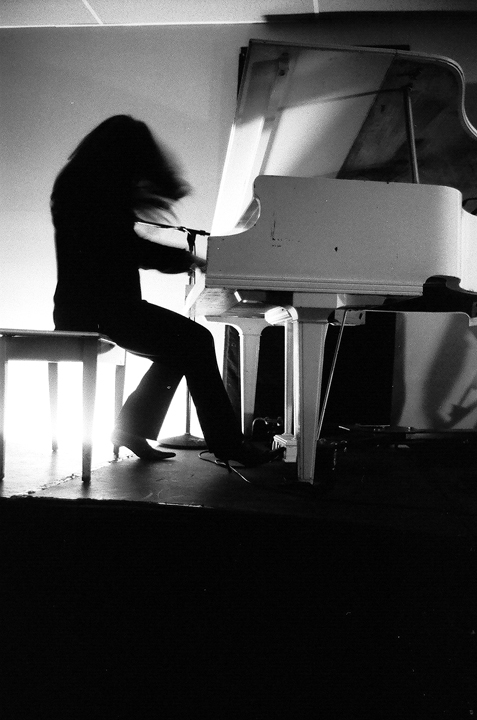
(Rebecca Pavlatos)
and
before long ONO had become a fully-functioning four-piece,
Rebecca bringing a sort of deconstructed classical training to
her noisy, surging organ playing and
Jesse filling things out with
a supremely tasteful palette of spiky guitar abstractions.
I know what you’re probably thinking;
if you’re anything
like me,
you’re deeply suspicious of rock and roll “reunions”,
wherein the wild, sweet innocence of youthful noisemaking
is inevitably neutered and sanitized to the point of hideous
self-mockery—think the Sex Pistols as a bunch of flatulent
sexagenarians, squeezing every last dollar from their safely
shrink-wrapped legacy.
The reemergence of ONO, I assure you,
is nothing of the kind. Not only do they continue to perform with
absolutely undiminished intensity and inventiveness, but they
seem to have found, in 2010, a far more diverse,
open-minded
and artistically-inclined music community in Chicago than the
rigid, four-on-the-floor hardcore
scene that they’d drifted away
from in the mid-80s. Could the world be catching up?
It’s also clear that they’re enjoying every minute of it.
“When I’m on stage, I am having more fun with myself—it’s like
masturbation, baby. I am having a good time,” says travis.
But
his tone changes when I ask whether there aren’t more serious
intentions at work as well.
“I am deadly serious in everything
I do,” he says flatly. “Always.”
He’s very much attuned to the
challenges and idiosyncrasies of not only playing in a dense,
performative noise band but being queer and black as well, and
he’s not shy in voicing his frustrations with the shape
of this
cultural context. “If we were truly interested in our culture, as
an American culture, or a black culture,
you would see more
black artists, more black galleries, more involvement,” he
laments.
“Instead, you get it in a band called ONO.”
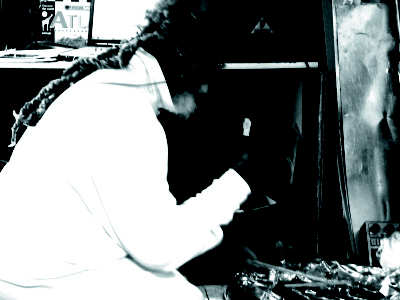
(travis)
He talks
of recontextualizing black traditions, such as the gospel diva:
“You get a sense of what these gospel divas are like… if you
look at the gospel divas and then look at an ONO show,
there is a
relationship there. I was thinking of this last month—I was in my
basement, thinking what am I going to do
with all these clothes?
I should start cataloguing
them. So I started counting
them and putting them in
order;
I have seventy long
frocks. And I looked at them
and I thought: Mahalia
Jackson…”
“There’s also this
concern that I personally
have about the relationship
of the entertainment
industry, especially the black
entertainment industry, to
the queer community,” he
continues.” The idea of
there being a black, queer
male just terrifies people.
And when I come out in a
gown, people assume a lot
about me that is not true. I wish it were sometimes! But I’m not
going to deny it—I would never deny it.
Simply because—it’s
important to me that queer culture be represented in who I am,
because I have never made a distinction between queer culture
and straight culture. Even though it’s been
beaten into me ever
since I got to the north—and it was worse in the south! Because
there, it didn’t exist.
That’s not possible—there’s no such thing as
sodomy.
You would never say that word in decent company.
And
so, you have this image onstage of a black male who—
I have no compunctions about wearing… I love a good frock. And for
me—I’m playing!
I’m having a good time!
At age 64, anybody
who says I can’t have a good time can kiss my ass!”
“I’m not going to get in people’s faces and say here’s
what we are and here’s what we are not,”
he says, reflecting
on the sometimes-uncomprehending crowds who have borne
witness to ONO’s feral flights of fancy over the years.
“If I can
get into their world by being their gimmick now, maybe I can
influence their children later.”
21st Century ONO

11MAY10
ONO @ CHICAGO MUSEUM OF CONTEMPORARY ART
^ ^ ^
Wednesday, May 12, 2010
Live Review:
ONO at the Museum of Contemporary Art

Text Mr. Nitetrotter - May 12, 2010
Yesterday I had the opportunity to catch Chicago 80's noise punk legends ONO at the Museum of Contemporary Art in Chicago.
If you haven't heard of them they were played with bands like Naked Raygun back in the 80s to mixed results,
they were also labelmates of the Birthday Party and Flipper.
You can buy their original LP Machines That Kill People for approximately 300 dollars on Ebay.
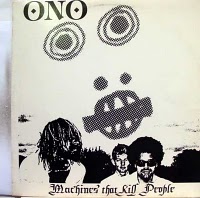
This was my third time catching ONO live.
The other two times were in completely different settings of diy punk shows with the average crowd.
This on the other hand was in the fancy cafe of the Museum right off of the Magnificent Mile.
I walked in a little late following the dark noise to see ONO frontman in a white gown and headdress
performing a unique dance with a hundred yuppies paying complete attention.
He freely roamed the room and even went outside the windows
via a few loops around the revolving door to change dresses.
He looked these people in the eye and was dead serious.
The crowd was all sipping overpriced drinks
as if they just got off their jobs in the loop
stopping by at the museum for free Tuesdays.
The show was part of a series of concerts
with art displayed by Plastic Crime(Steve Krakow)
who is the man behind the
Secret History of Chicago Music
comic strip series in the Chicago Reader
among other amazing pyschedelic activities.
He did well by picking out ONO to play this.
Each time I have seen ONO it has been totally different but always satisfying.
This was the darkest and most fucked up I have witnessed them.
It was also the most heavy, it sounded great in that room.
The music backing up Travis' performance art is reminiscent of
Throbbing Gristle or something like that with their own flavor.
You can tell there is a definite Chicago R&B influence
and I can't get over the
African Spiritual style of singing Travis does in the songs.
He is 62 and still killing it!
He is my favorite cross dressing front man EVER!
If you have a chance to see them make sure you do it.
They are certainly one of the Chicago's best kept secrets.
Posted by NITETROTTER666 at 6:05 PM
08MAY10 -
OPENING
STEVE KRAKOW
(The Secret History of Chicago Music)
@
MCA CHICAGO
Steve KrakowMay 8-30, 2010 |
Steve Krakow, The Secret History of Chicago Music (Ono), 2008. Courtesy of the artist |
Steve Krakow, aka Plastic Crimewave,
is an artist, musician, and curator widely known for his info strip, The Secret History of Chicago Music.
Comprising approximately 100 8-by-11-inch drawings that incorporate
extensive research by the artist,
The Secret History of Chicago Music has developed into an important study of the
obscure blues, jazz, rock, funk, soul, folk, R&B, and punk musicians from Chicago's rich and diverse musical history.
As Krakow states, the series highlights
"pivotal Chicago musicians that somehow have not gotten their just dues."
Krakow hand draws and writes each installment of the strip
in a style that references such iconic comic artists as Robert Crumb,
while the series itself continues the tradition of
documenting and disseminating America's musical heritage,
as pioneered by Folkways Records and Harry Smith's Anthology of American Folk Music.
The info strip is published every two weeks in the Chicago Reader
and is included in a musical segment/show aired every second Sunday on the Nick Digilio show on WGN 720.
For his UBS 12 x 12 exhibition,
Krakow presents a selection of The Secret History of Chicago Music strip, dating from 2005 to the present.
The exhibition also includes a series of Tuesday night performances by musicians
who have been featured in The Secret History of Chicago Music.
The performance series takes place in the UBS 12 x 12 Gallery.
In addition to The Secret History of Chicago Music,
Krakow's Galactic Zoo Dossier, a hand-drawn "psychedelic magazine"
is published by the Chicago-based label Drag City,
and his illustrations have been commissioned for
numerous magazines, album covers, comic books, and promotional posters.
Krakow is also a member of the psychedelic rock band Plastic Crimewave Sound,
and curates the Million Tongues music festival at the Empty Bottle in Chicago.
. . .
Performance Schedule
ONO:
Tuesday, May 11, 7 pm
ONO have been shaking up Chicago audiences since the early 80s
with their curious mix of art theatre, gospel, electronics, and anything else they choose.
Produced by Al Jourgensen of Ministry and label mates to legendary acts like
Flipper and the Birthday Party, they also polarized crowds opening for punk acts like Naked Raygun.
The electric front man known only as Travis and the musical genius P. Michael, continue to impress.
06MAY10
Dear ONO FANS:
The following article is an excerpt. The article is well worth reading in its entirety.
It contains significant Links, including a VIDEO Link to
ONO @ the 666 Show - Chicago - 1984
).
Thank You Jake Austen
The A.V. Club *Chicago*
Tutu And The Pirates and four other Chicago punk-rock asterisks
by Jacob Austen May 6, 2010
Two of Chicago’s earliest and oddest punk bands reunite Saturday at the Empty Bottle
to celebrate the release of their retrospective albums:
Tutu And The Pirates’ Sub-Urban Insult Rock For The Anti/Lectual and DA’s !.
Their reappearance is a reminder that while Chicago-punk bigshots like
Naked Raygun, The Effigies, and Big Black tended to be aggressive, literate bands,
the city's also had its share of weird and crude punk acts, too.
Whether it was Jim Skafish’s massive nose,
Algebra Suicide’s poetry, or Toothpaste’s cereal-based comedy,
a number of bands had conventions that were irregular even for a punk scene,
assuring they’d remain asterisks in Chicago rock lore.
Before the Tutu And The Pirates/DA show,
The A.V. Club inspected five bizarre acts from Chicago's punk yesteryear and pinpointed
what went wrong.
. . .
ONO (1980-∞)
What was wrong:
This noise/experimental/performance art project was fronted by Travis Dobbs (a.k.a. "Travis"),
a majestic, gay Vietnam vet and sound-sculptor.
ONO combined drones, gospel, theatricality, blackface, Dynasty, and cross-dressing
in ways that drove Naked Raygun fans crazy.
What happened:
Travis became a fixture in Chicago’s arts scene.
In part inspired by interest from Chicago’s psychedelic overlord
Plastic Crimewave,
ONO has returned to Chicago stages and plays a show at the
Museum of Contemporary Art on May 11.
Whether aging '80s scenesters can survive DA, Tutu, and ONO in one weekend remains to be seen.
21APR10
travis interviewed by Clare Fentress:
travis travis (uncapitalized, no last name) has been a fixture of the South Side arts scene
since he moved to the area ten years ago.
A Mississippi native of black and Native American heritage, he is a visual artist,
the front man of cult noise-rock group ONO, and a computer technician
at the University of Chicago’s Chapin Hall.
Chicago Weekly:
Do you see any artists or galleries on the South Side that you either admire
or you think have been important forces in shaping an arts community in the area?
travis:
Oh yes. The reality, though, is that most of them are white.
There’s a woman, Rebecca Zorach, here at the University of Chicago. The woman is God.
She goes places on the South Side that black folks won’t go,
and is instrumental in looking at art, not only from an “outside” perspective,
but also as an insider. She has an appreciation for the reality that all art is political.
And that I have deep respect for.
“Art for art’s sake” is not now, nor has it ever been, a value in the black community.
But we are at a great, great point in history.
We can ask, what does it mean to have black art? To be a black artist?
To look at black art and to have a sense of what it means?
How do you read a black work if you are not black?
Rebecca could probably answer that better than most black curators could.
I’m not suggesting that you have to be black by any means, but there’s a black sensibility that,
as Americans, we easily overlook or have no real reason to look for. But it is there.
Another part of that is that there are old, old, black people who are dying rapidly, but who have a lot to say.
Once I actually did art on my lawn, on the street in front of my house.
And these old black women just sat down in the street with me,
and we were creating work out of soil, and paint, mixing soil with paint and stones.
And these women had things to say. I go to the black cemeteries and I talk to the people who are black gravediggers,
and these people have stories, they have unimaginable tales about their relationships to their children;
their values are very different. Well, those things also eventually, or should, fall into art.
Writing is a part of that, and storytelling is part of art.
CW:
I’d be interested to hear what you think about Theaster Gates,
who is doing all this work that he posits as being very specific to the black community,
but at the same time is being embraced by basically a white museum audience.
t:
Theaster Gates is wonderful. He and I put on a show at the South Side Community Arts Center last year.
And last summer—thanks to Rebecca Zorach, who brought us together, by the way—I went to his house
and helped build teepees. Teepees! And some people got so excited, they had the police take them down
because “homeless people might move in.” Imagine that! We might create an art that might be useful!
And it was Theaster Gates who brought that to bear. I love the man’s work.
CW:
You talk about creating art that you think has value and that you find important.
Do you make those valuations as a person, as a black man,
as an artist working in a community—where does that value come from?
t:
Someday I’m going to be old and I’m going to either have to die
or enjoy what I’m doing.
I think that old people should never be bored.
I often tell my friends, “I am too old to be bored.”
And that to me has everything to do with my approach to art.
It has to be something that is of value to me that makes me want to do it continuously.
That’s my response. I put on my art shows, in which I put on my art.
And there are people who are willing to indulge that and play with me.
(Clare Fentress)
17APR10
ONO @ The MOPERY
VIDEO from Anna Gregoline & SAOKOPUNK
ONO "The Model Bride"
ONO "Johnny Angel" Surveilled
09MAR10
ONO Reviews, via Coach House Sounds
Thank You Matt, Doug and Neal
http://reviewsic.com/2010/03/04/talk-shop-with-coach-house-sounds-matt-baron/
T.S: Thus far into the project, what is the most memorable session that you’ve recorded?
M.B: I’d have to say our session with Ono, who are an experimental art rock band
formed in the late 70’s. We also invited Joe Carducci, formerly of SST Records
and now a writer/filmmaker, and having him there, just sort of the grandfather
of this whole indie-rock,
DIY thing, and having him in the basement with Ono,
who’s unlike any other band I’ve ever heard,
was just an incredible experience.
Their keyboardist brought these homemade
Grecian desserts from a wedding
she had been at the night before and that was really cool.
It was overall just a really good day,
that band has such a great personality; both as individuals and as a band.
= = = = = = =
http://www.youmethemeverybody.com/
ONO “I Am An Elephant”
February 4th, 2010
From their Coach House Sounds session. You, Me, Them, Everybody Chicago Music Podcast.
Download this episode
Play this episode in a new window
= = = = = = =
http://chicago.thedelimagazine.com/node/906
Concert Review: Coach House Sounds Night @ The Whistler
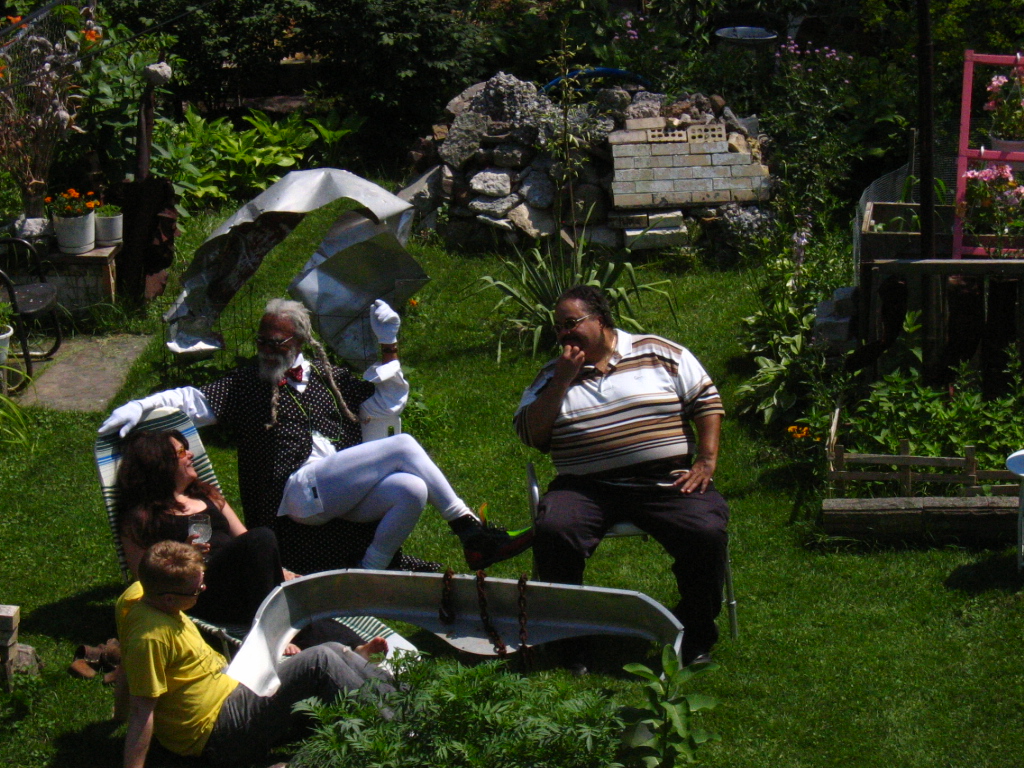
" It happens all the time, right?
You walk into your local bar and pounding drums, swirling organs, and measured guitar.
You turn to look at the stage there you see a man in a peach dress wearing a sort of headdress
made out of flowers and banging on sheet metal.
Well, it only happened if you had walked in during a performance by the Chicago legends ONO
like I did last night at The Whistler.
ONO has been perfecting their wild performance art since 1980,
and completely wowed the crowd.
Lead singer Travis merged the presence of Saul Williams, the darkness of Mike Patton,
and the fashion of Courtney Love.
His voice is a frightening crooner that often breaks to the darker side of things.
Following ONO was the psychedelic furry or Moonrises.
This band was a sonic explosion and they played with passion and plenty of feedback.
They combine elements of popular acts like Wolfmother or The Black Keys,
but adds a fierce darkness to their sound.
The night was incredible, but I had to leave before the
gentler Lesser Birds of Paradise took the Stage.
Coach House Sounds had done it again, combined inventive music with
live literary reading and created an atmosphere charged with creativity.
You can catch ONO and witness the madness in person on
Feb 26th @ The Woodlawn Collaborative with Suckling Pigs and Anemrostone."
Published on February 17, 2010 -
10FEB10
Coach House Sounds Presents ONO
ONONONONONONONONONONONONONONONONONONONONONONONONONONO
"...ONO have the noise-gospel musical genre entirely to themselves." ===Joe Carducci
ONONONONONONONONONONONONONONONONONONONONONONONONONONO
Hello, Thanks to Doug & Neal, we have two new sessions posted on Coach House Sounds today.
And thanks to Joe Carducci,
who posted a photo that he shot and some information on ONO
and their session @ Coach House Sounds on 11/22/09.
See all this on his blog
The New Vulgate.
And thanks to Plastic Crimewave, who performs in Moonrises, for introducing us to ONO in the first place...
We're thrilled to be posting the Moonrises & ONO sessions
in conjunction with our upcoming event at the Whistler...
Tuesday 2/16
7pm (EARLY SHOW) @ The Whistler
Lesser Birds of Paradise
Moonrises
ONO
with live readings by Brian Costello & Jason Behrends
2421 N Milwaukee Avenue in Chicago, no cover...
------------------- MATT BARON COACH HOUSE SOUNDS
www.travistravis.com http://www.myspace.com/onopmichaelono
ONONONONONONONONONONONONONONONONONONONONONONONONO
NONONONONONONONONONONONONONONONONONONONONONONONON
ONONONONONONONONONONONONONONONONONONONONONONONONO
ONO Article by ARVO ZYLO
"IF YOU CAME FOR MUSIC, LEAVE NOW!"
http://musiquemachine.com/articles/articles_template.php?id=159
THU., 26NOV09 = Happy THANKSGiving 2009
>> Series 1 Episode 11 (November 09)
Industrial/Avant-Gospel Music from ONO
http://blogs.myspace.com/alrealon
ONO @ VIADUCT THEATRE
05SEP09 - Curated by John Brearley
Camera by Anna Gregoline
Live Projections by Clint Mosling
http://www.youtube.com/watch?v=sc1DFyLc_lY
http://www.youtube.com/watch?v=NxpfzIhSO7Y
travis @ PrideParade2009
Wearing running gear deemed too shameless
to carry the American Flag for AVER/Chicago in the Chicago PrideParade
(Photos by E. Zasadil)
ONO Interviewed by Roctober Magazine
+
ONO LPs for DOWNLOAD
GalleryONE
GalleryTWO
GalleryTHREE
RECENT SOLO SHOWS
(Installation Views)
Itawamba N-Egress Mississippi Mud
Mississippi Flower Garden
Festival Of The Arts 2007
RECENT GROUP SHOWS
Scot's Bar
MidWayFreeCity2007
Festival Of The Arts 2007
INSTALLATION ART
=MY GARDEN=
REJECTED & DESPISED
BY BLACK GALLERIES
ONOMATOPOEIA BEFORE MUSIC
"Onomatopoeia ... is a word or a grouping of words that imitates the sound it is describing,...."
Source: Wikipedia
21stCentury Industrial NOISE
ONONONONONONONONONONONONONONONONONONO
"In common use, the word noise means unwanted sound or noise pollution...."
"In signal processing or computing it can be considered data without meaning;
that is, data that is not being used to transmit a signal,
but is simply produced as an unwanted by-product of other activities.
In Information Theory, however, noise is still considered to be information.
In a broader sense, film grain or even advertisements in web pages can be considered noise.
Noise can block, distort, or change/interfere with the meaning of a message in both
human and electronic communication...."
Source: Wikipedia
ONONONONONONONONONONONONONONONONONONONONONONO
Visit P.Michael, Leader of ONO (since 05JAN1980):
http://www.myspace.com/onopmichaelono